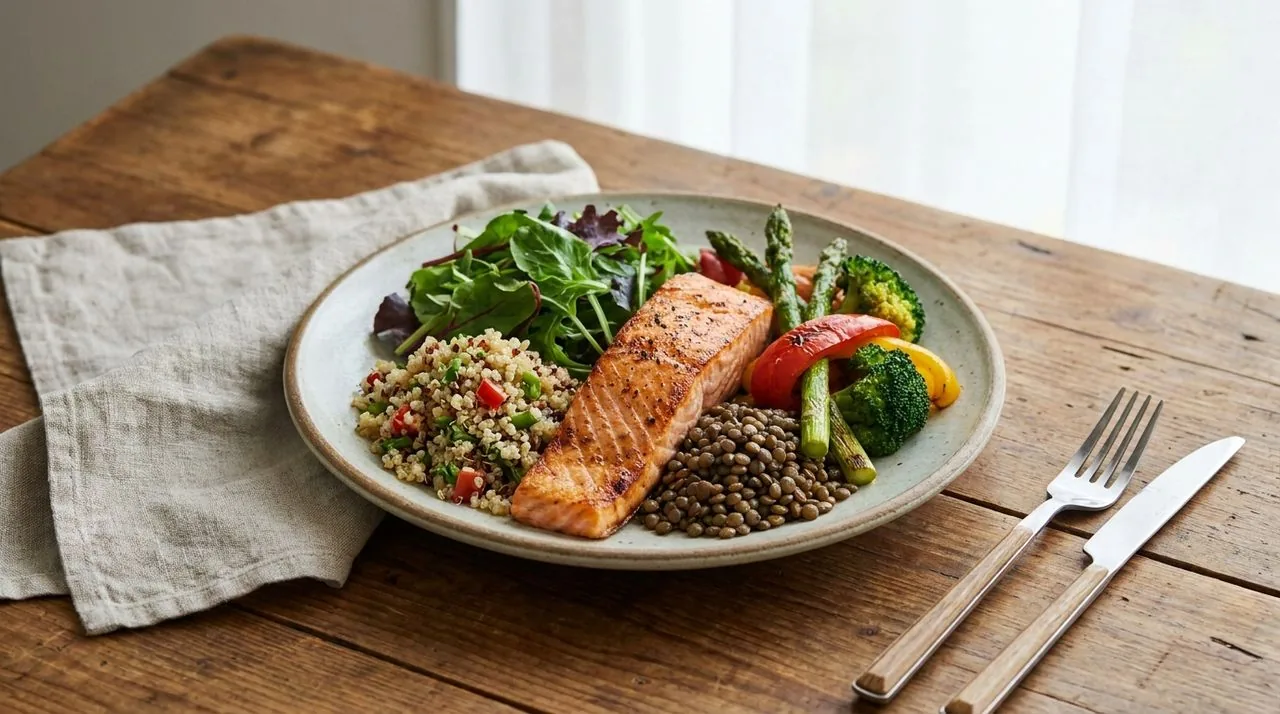
In short
- Less beer and fructose — the strongest lever.
- Less offal and red meat; low-fat dairy is helpful.
- Hydration and a healthy weight lower uric acid.
- Cherries and berries are considered friendly.
You can often lower uric acid a good deal through lifestyle. Here is a concrete plan. (For an explanation of the values, see Uric acid and gout.)
Step 1 — Limit alcohol and sugary drinks
Beer and drinks containing fructose raise uric acid the most. This is the biggest lever. Often this change alone lowers the value noticeably.
Step 2 — Fewer purines from food
Cut down on offal, red meat and some seafood. Replace them with plant proteins and low-fat dairy products.
Step 3 — Hydration and weight
Enough water helps the kidneys flush out uric acid. Losing excess weight lowers the values further. Cherries are considered helpful.
| Limit | Include |
|---|---|
| beer, spirits | water, unsweetened drinks |
| offal, red meat | legumes, low-fat dairy |
| sugary drinks (fructose) | cherries, berries, vegetables |
How do I know it's working? Repeat uric acid in a few weeks to months. The target depends on whether you have already had gout.
How Blood Lab 360 helps you
Upload your report and we explain your uric acid. We set a target based on your risk and track your progress over time.
Frequently asked questions
Which drinks raise uric acid the most?
Beer and drinks sweetened with fructose. Cutting them back is often the strongest step.
Does drinking water help?
Yes — good hydration supports excretion and lowers the risk of stones and attacks.
How quickly does it go down?
With consistent habits, often within a few weeks to months.