In short
- B12 and folate are key for the blood and the nervous system.
- Deficiency causes fatigue, tingling and anaemia.
- At higher risk: vegans, older people, absorption disorders, some medicines.
- You raise them with food and, if needed, a supplement.
- A low B12 with nerve symptoms belongs with a doctor — not just a supplement.
Vitamin B12 and folate are essential for making red blood cells and for healthy nerves. When they run low, this often shows as fatigue and an anaemia that is different from iron deficiency.
Why they matter
Both take part in making red blood cells and in cell division. B12 also looks after the nerve sheath. Deficiency can cause a special type of anaemia (large blood cells) and neurological signs such as tingling. Because the symptoms develop slowly, they are often overlooked.
What your values mean
| Marker | Meaning |
|---|---|
| B12 low | deficiency (fatigue, tingling, anaemia) |
| B12 within range | usually sufficient; with symptoms MMA/holotranscobalamin are added |
| Folate low | deficiency (anaemia, important in pregnancy) |
Reference limits depend on the laboratory and the method. The B12 “grey zone” is clarified with additional tests. Judge by your own report.
How to raise B12 and folate naturally
1) B12 from animal foods
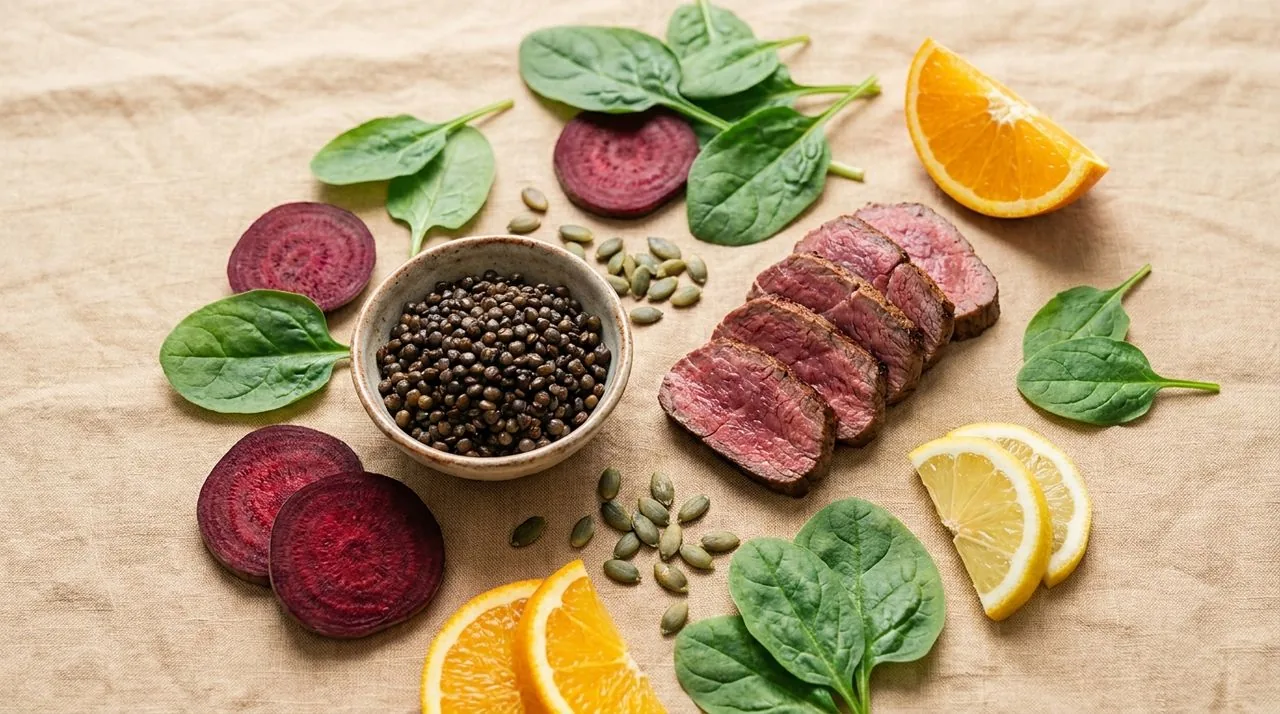
Meat, fish, eggs and dairy products. Vegans get almost no B12 from food. For them a supplement is practically essential.
2) Folate from plants
Leafy greens (spinach, kale), legumes, eggs and citrus fruit. “Folate” is the natural form, “folic acid” the synthetic form found in supplements.
3) A supplement when deficient
With a proven deficiency a supplement works. With a very low B12 or an absorption disorder, injections are sometimes needed. A doctor decides.
The right order: measure first, then supplement in a targeted way. Folate can “mask” anaemia caused by B12 deficiency, so it makes sense to check them together.
How Blood Lab 360 helps with this
Blood Lab 360 explains B12 and folate together with ferritin and the blood count. That helps tell the causes of fatigue apart. It also tracks your progress over time.
Frequently asked questions
What are the signs of B12 deficiency?
Fatigue, pallor, tingling in the hands and feet, poorer concentration and memory, and anaemia.
Who is at higher risk?
Vegans and vegetarians, older people, people with absorption disorders and those on certain medicines (metformin, proton pump inhibitors).
How do I raise B12 and folate?
B12 with animal foods or a supplement; folate with leafy greens, legumes and, if needed, a supplement.