In short
- The total white cell count says little. The breakdown by cell type is what tells you something.
- Neutrophils respond to bacteria and stress, lymphocytes to viruses, eosinophils to allergy and parasites.
- After an infection, deviations last for weeks. Repeating the test before six weeks often just prolongs the worry.
- In some people, mildly low neutrophils are a permanent normal state. It does not mean disease.
- It becomes important when the deviation is large, persistent or accompanied by fever, weight loss, night sweats or enlarged lymph nodes.
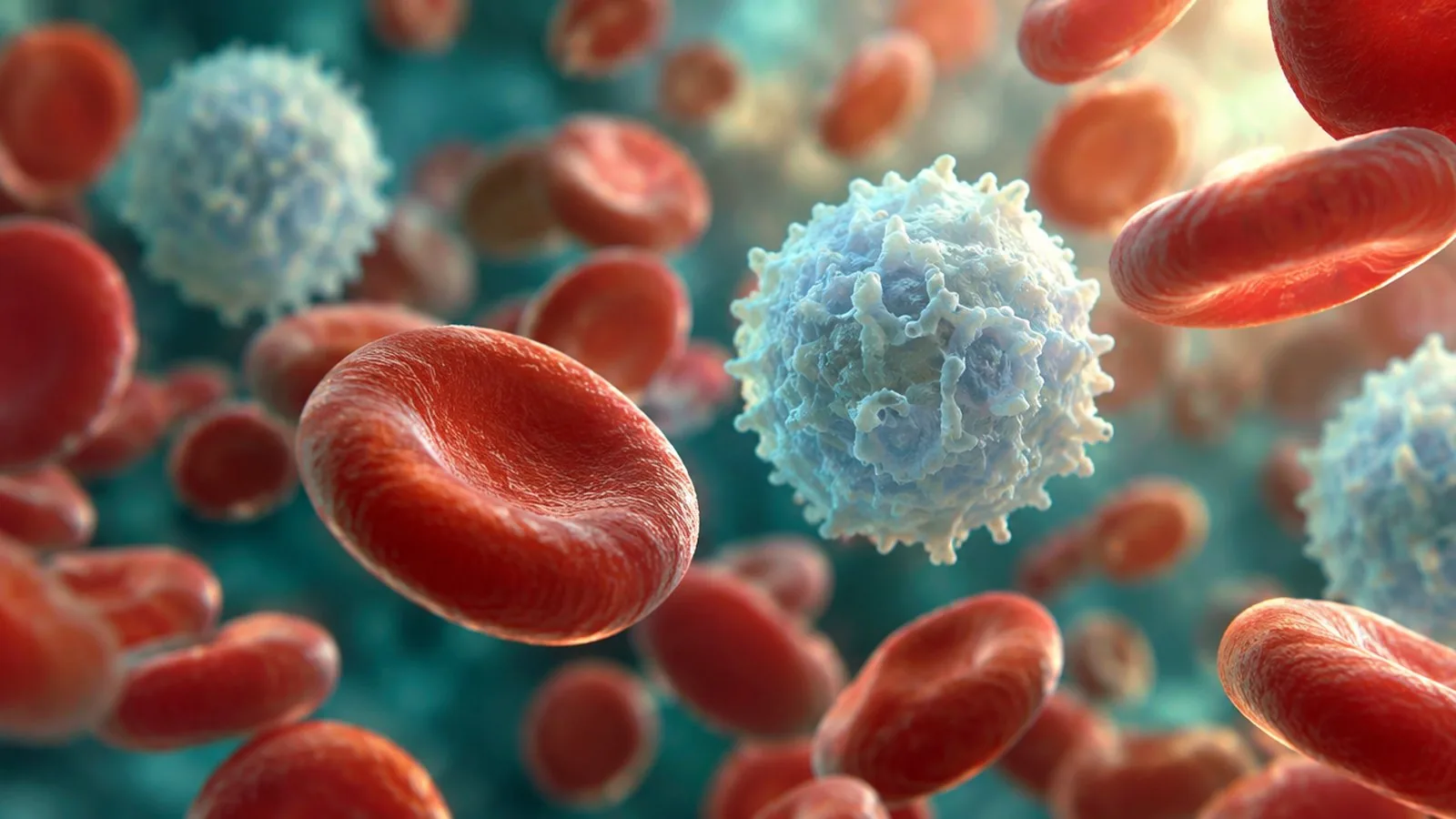
The white blood cell differential splits white cells into five types. This breakdown tells you whether the body is fighting a bacterium, a virus or an allergy. It also tells you whether the deviation deserves attention at all.
Why the total alone says little
Leukocytes is the collective name for five cell types, each with its own job. Their total can be fully within range while the ratio between them is markedly changed. The reverse is also true. That is why the lab runs a differential count alongside the blood count. It shows the share and the absolute number of each type.
When you read it, the absolute number tells you more than the percentage. A percentage shifts when another cell type changes. Our app therefore reads absolute numbers and uses the percentage only as a supplement.
The five types and what each one means
| Cell | Job | High often means | Low often means |
|---|---|---|---|
| Neutrophils most numerous | First defence against bacteria. | Bacterial infection, inflammation, injury, physical or emotional stress, corticosteroids, smoking, pregnancy. | Viral infection, some medicines, B12 or folate deficiency, more rarely bone marrow disease. |
| Lymphocytes | Response to viruses, antibody production. | Viral infection (also for weeks afterwards), some chronic infections, and with a marked and persistent rise, a blood disorder. | Recent infection, corticosteroids, severe physical stress, more rarely an immune system disorder. |
| Monocytes | Clean-up and recovery after inflammation. | Recovery phase after an infection, chronic inflammation, autoimmune disease. | Rarely important on its own. |
| Eosinophils | Allergy and defence against parasites. | Allergy, asthma, atopic dermatitis, drug reaction, parasites. | No significance; a low value is usual. |
| Basophils least numerous | Take part in the allergic response. | Rare; a persistent rise needs an explanation. | No significance. |
The most common patterns and what to do with them
| Pattern | Most common explanation | What to do |
|---|---|---|
| Neutrophils high, lymphocytes low | Bacterial infection, inflammation or a stress response; corticosteroids give the same pattern. | Repeat after recovery, not during it. |
| Lymphocytes high, neutrophils low | Viral infection, also several weeks after it. | Repeat in 4–6 weeks. |
| Eosinophils mildly high | Allergy, asthma, eczema, drug reaction. | Link it to symptoms; with a marked rise, see a doctor. |
| Monocytes mildly high | Recovery after an infection. | Repeat in 4–6 weeks. |
| Neutrophils mildly low, everything else fine, feeling well | In some people this is a permanent normal state and not a disease. | Repeat once; if the picture is the same and stable, there is no reason to worry. |
Why wait four to six weeks
White cells respond quickly and settle slowly. After a viral infection, lymphocytes stay raised for weeks; after a bacterial infection, neutrophils do. Repeat the test too soon and it shows the same deviation. That is not because something is wrong. The body is still recovering.
The same applies to a sample taken during an infection. A blood count done in the week of a cold is not a baseline for anything. If you want a baseline picture of your health, wait at least two weeks after recovery.
In practice: a deviation in the white cell count without symptoms most often needs to be repeated, not expanded. Extra tests without a repeat often only multiply random findings.
When a deviation needs a work-up
- A very high or very low total white cell count, not just a mild deviation.
- Immature cells in the report or a lab comment about an unusual picture.
- A persistent deviation that does not disappear after two measurements six weeks apart.
- Several types deviating at the same time, especially with low haemoglobin or low platelets.
- Accompanying signs: unexplained fever, night sweats, weight loss, enlarged lymph nodes, frequent infections, easy bruising.
- Markedly raised eosinophils or persistently raised basophils.
In these cases, the right step is to talk to a doctor. They will decide which tests come next. Paying out of pocket to expand the panel without that judgement rarely gives an answer.
Frequently asked questions
What do low neutrophils mean?
Most often a recent viral infection or the effect of a medicine. In some people a mildly low count is a permanent normal state. If the drop is large or comes with frequent infections, talk to a doctor.
Why are my lymphocytes still high even though I am well again?
White cells take weeks to settle after an infection. A repeat before four to six weeks often shows the same picture, and it does not mean anything.
What do high eosinophils mean?
Most often allergy, asthma, eczema or a drug reaction, more rarely parasites. A mild rise with known allergies is expected; a marked rise needs a work-up.
Should I read percentages or absolute numbers?
Absolute numbers. A percentage shifts when another cell type changes, so it can mislead.
When should I repeat the blood count?
In four to six weeks, and not during an infection or right after it. For a baseline picture of your health, wait at least two weeks after recovery.
Sources: IFCC C-RIDL — blood count reference intervals and comparability between laboratories · ICSH — standards for the differential count and reporting of absolute values · BSH — management of neutropenia and lymphocytosis in adults · EAACI — eosinophilia in allergic disease · our knowledge base.