In short
- High monocytes most often mean your body is recovering from an infection or dealing with ongoing inflammation. A mild rise is common and usually harmless.
- Our database flags monocytes above 1.0 × 10⁹/L (1,000/µL) or a monocyte share above 10%.
- High basophils are uncommon. Because the count is tiny, a small shift can cross the 0.1 × 10⁹/L (100/µL) line.
- A rise in either cell that is confirmed on a repeat test needs a doctor's review, especially with other abnormal blood values.
- Fever that will not settle, night sweats, weight loss or swollen lymph nodes are reasons to see a doctor soon.
Monocytes and basophils are easy to overlook on a report until one of them is flagged. This guide explains what a high count means, the normal ranges, why the absolute count matters, and which patterns need a doctor. For the full picture of all five white cell types, start with our white blood cell differential guide.
What does it mean if monocytes are high?
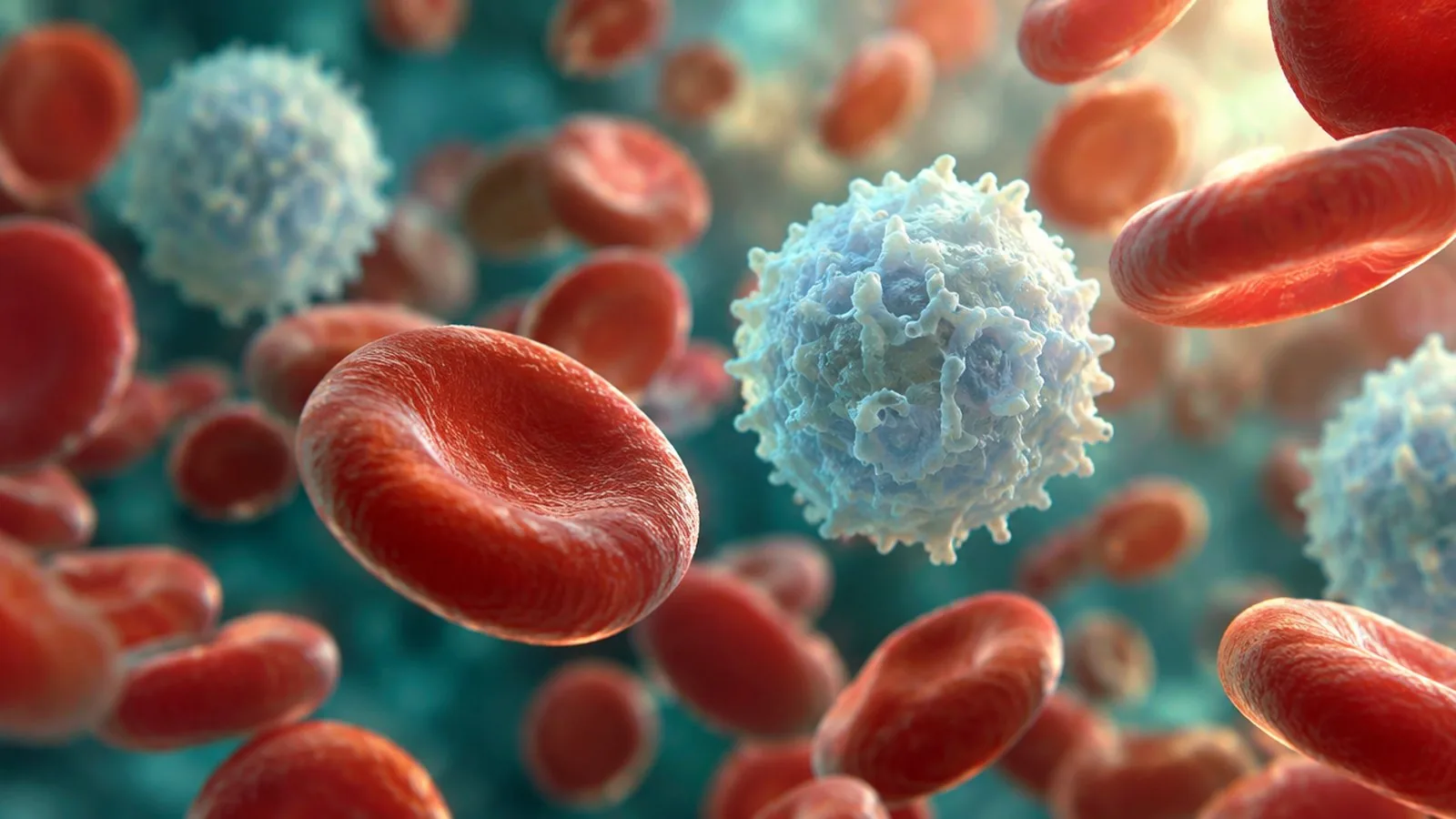
High monocytes (monocytosis) mean more of the white cells that clear away germs and dead cells are circulating. The most common everyday reasons are the recovery phase after an infection and ongoing inflammation. A mild rise without symptoms is usually harmless.
Monocytes kill bacteria, viruses and other germs, boost the immune response and clear away dead cells (MedlinePlus). In tissues they turn into macrophages, the body's clean-up cells.
StatPearls lists these causes of high monocytes:
- Viral and parasitic infections.
- Tuberculosis and infection of the heart valves (endocarditis).
- Autoimmune diseases and granulomatous diseases, where small clusters of immune cells form in tissues.
- Faster breakdown of red cells (hemolytic anemia).
- Smoking and some medicines.
- Less often, blood cancers and myeloproliferative diseases.
In practice, the timing tells you a lot. A mild rise a few weeks after a cold or flu fits recovery. A rise that stays for months without a clear reason needs a closer look.
What is the normal range for monocytes and basophils?
A normal absolute monocyte count is 0.2–1.0 × 10⁹/L (200–1,000/µL), and a normal basophil count is up to 0.1 × 10⁹/L (100/µL) in our database. StatPearls gives the same monocyte range, with a share of about 2–8% of white cells. Our database uses 10% as the upper limit for the monocyte percentage and 1.5% for basophils.
| Marker | Value | How Blood Lab 360 reads it |
|---|---|---|
| Monocytes (absolute) | below 0.2 × 10⁹/L (below 200/µL) | Below the limit: seek advice. |
| Monocytes (absolute) | 0.2–1.0 × 10⁹/L (200–1,000/µL) | Within the reference range. |
| Monocytes (absolute) | above 1.0 × 10⁹/L (above 1,000/µL) | Above the limit: seek advice. |
| Monocytes (percentage) | up to 10% | Within the reference range. |
| Monocytes (percentage) | above 10% | Elevated: often recovery or chronic inflammation; context. |
| Basophils (absolute) | up to 0.1 × 10⁹/L (up to 100/µL) | Within the reference range. |
| Basophils (absolute) | above 0.1 × 10⁹/L (above 100/µL) | Above the limit: seek advice. |
| Basophils (percentage) | up to 1.5% | Within the reference range. |
| Basophils (percentage) | above 1.5% | Elevated: rare; if it persists, see a doctor. |
Source: these are common laboratory reference intervals used in the Blood Lab 360 database, because no European guideline sets an explicit cut-off. Reference ranges differ between labs. StatPearls (2024), for example, gives 0–200/µL for basophils, so some labs flag basophils later than we do.
Monocytes absolute high or only the percentage?
Read the absolute count, because the monocyte percentage rises whenever other white cells fall. After a viral illness, neutrophils can dip for a while. The monocyte share then looks high even when the number of monocytes is normal.
- White cells 4.5 × 10⁹/L with monocytes at 12%: the absolute count is 0.54 × 10⁹/L (540/µL). The percentage is flagged, the count is normal.
- White cells 11.0 × 10⁹/L with monocytes at 9.5%: the absolute count is 1.05 × 10⁹/L (1,050/µL). The percentage is in range, the count is high.
If your report shows only percentages, multiply: white cells (WBC) × percentage ÷ 100. Our database reads white cells as 3.5–8.8 × 10⁹/L (3,500–8,800/µL), based on NORIP (2004). A high total count makes a high absolute monocyte count more likely, even at a normal percentage.
What do high basophils in the blood mean?
High basophils (basophilia) are uncommon, and a single mildly high value is often not meaningful. Basophils are the rarest white cells. They release enzymes during allergic reactions and asthma attacks (MedlinePlus). Because their count is so small, method differences between labs can push a value just over the limit.
StatPearls lists allergy, chronic inflammatory disease, viral infection, tuberculosis, hormone (endocrine) disorders and some medicines as causes. It also lists myeloproliferative diseases, where the bone marrow makes too many blood cells. StatPearls adds that basophilia on its own, without another explanation, warrants a work-up to rule out such a process.
In practice, that means two steps. First, repeat the test when you are well. If basophils stay high, and especially if other blood values are also off, see your doctor. Our database treats persistent, marked basophilia with other blood abnormalities as the clear signal for a medical review.
What do low monocytes or low basophils mean?
A low monocyte count, below 0.2 × 10⁹/L, is mostly not meaningful when the rest of the blood count is normal. StatPearls lists infection, autoimmune disease and medicines as causes. Less often it comes from bone marrow failure (aplastic anemia) or lymphoproliferative disease. Low basophils have no clinical significance, because the normal range starts at zero.
Which blood count patterns change the meaning?
Monocytes and basophils tell the most when you read them next to other values. These are the patterns that matter:
- Monocytes mildly high + lymphocytes high, a few weeks after a cold or flu: a typical recovery picture. Repeat once you have been well for some weeks.
- Monocytes high + hs-CRP above 3 mg/L: fits ongoing inflammation. In our database, hs-CRP above 3 mg/L means elevated inflammation with a source worth finding. See hs-CRP and inflammation.
- Monocytes high + low hemoglobin: can fit chronic inflammation or faster red cell breakdown. A doctor needs to sort out which.
- Monocytes or basophils high + abnormal platelets, very high white cells or low hemoglobin: more than one cell line is affected. This needs a doctor rather than waiting.
- Basophils high + eosinophils high: both cells take part in allergy, so this often fits an allergic reaction. See high eosinophils.
- Monocytes mildly high in a smoker, stable over repeated tests: smoking is a listed cause. A stable value in someone who feels well is less worrying than a rising trend.
For what one flagged number means in general, read a value outside the reference range.
See a doctor soon if monocytes stay above 1.0 × 10⁹/L (1,000/µL) on a repeat test without an obvious reason. The same applies if basophils stay high together with other abnormal blood values. Go sooner with fever that will not settle, night sweats, unexplained weight loss or swollen lymph nodes. A cough lasting weeks with fever or night sweats also needs a check, because tuberculosis can raise monocytes. White cells above 20 × 10⁹/L (20,000/µL) or below 2 × 10⁹/L (2,000/µL) need prompt review.
How Blood Lab 360 reads this
Blood Lab 360 reads absolute counts first and uses percentages only as support. We say openly that the monocyte and basophil ranges are common laboratory reference intervals, because no European guideline sets a cut-off. The range printed on your report still applies to your lab.
We read monocytes together with white cells and hs-CRP, and basophils together with white cells and eosinophils. Where the database has separate bands for age or sex, your values are matched to them. The default re-test interval for both markers is 12 weeks, which gives a recent infection time to clear. If your doctor wants a sooner repeat, follow that advice.
Frequently asked questions
What does high monocytes mean?
Most often recovery after an infection or ongoing inflammation. Less common causes include tuberculosis, autoimmune disease and, rarely, blood disorders. A mild rise in someone who feels well is usually harmless.
What does monocytes absolute high mean?
It means more than 1.0 × 10⁹/L (1,000/µL) monocytes are circulating. Repeat the test once you are well. If it stays high without a reason, or other values are also abnormal, see a doctor.
What is the normal range for monocytes?
An absolute count of 0.2–1.0 × 10⁹/L (200–1,000/µL). The share is usually up to about 10% of white cells. Labs differ slightly, so compare with your report.
What causes high basophils?
Allergy, chronic inflammation, viral infection, hormone disorders and some medicines. Rarely, a bone marrow disease makes too many cells. A persistent rise, confirmed on a repeat test, needs a doctor.
Can smoking raise monocytes?
Yes. StatPearls lists smoking among the causes of high monocytes. MedlinePlus also notes that smoking, stress and alcohol can affect white cell results.
When should I repeat the test?
Our default re-test interval is 12 weeks for a mild rise without symptoms. Do not use a sample taken during an infection as your baseline. Follow your doctor if they want a sooner repeat.