In short
- A high white blood cell count (WBC) most often means your body is reacting to an infection, inflammation, stress, smoking or a medicine such as corticosteroids.
- A low WBC most often means low neutrophils, for example after a viral infection or from a medicine.
- Our adult range is 3.5–8.8 × 10⁹/L (3,500–8,800/µL), from the Nordic NORIP study. Many US labs use 4.5–11.0 × 10⁹/L.
- The total alone says little. Check which cell type moved, and read absolute counts rather than percentages.
- One mildly abnormal result is rarely an emergency. Repeat it about 4 weeks after you feel well.
- See a doctor quickly for a very high or very low count, or for any abnormal count with fever, bruising, night sweats or weight loss.
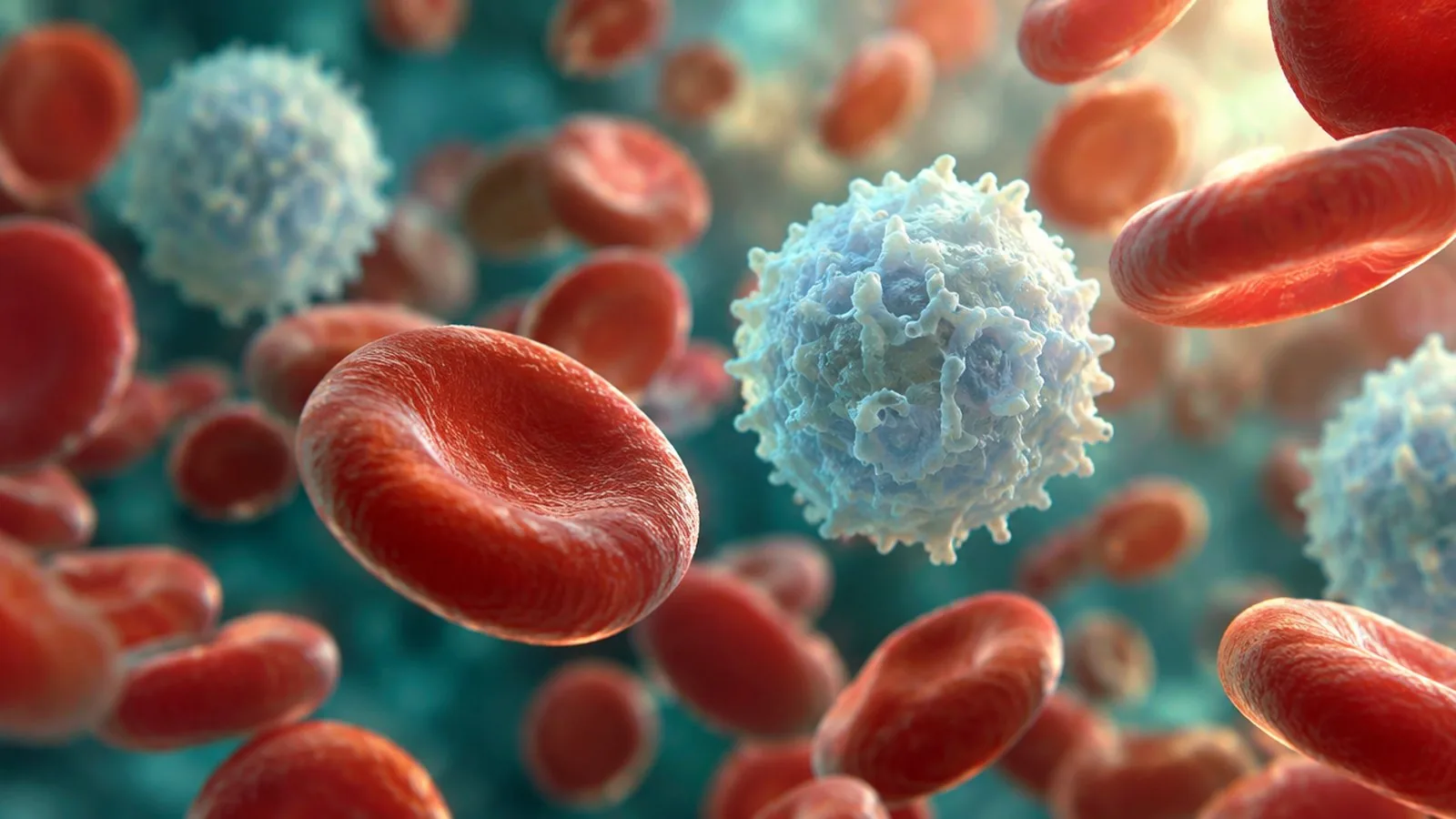
White blood cells (WBC, leukocytes) are counted in every complete blood count. This guide shows what a high or low result means and which numbers matter. You will also learn how to read WBC together with neutrophils, lymphocytes and hs-CRP, and when to act fast.
What is the normal WBC range?
For adults, Blood Lab 360 uses 3.5 to 8.8 × 10⁹/L as the reference range for white blood cells. That equals 3,500 to 8,800 cells per microliter, the unit on most US reports. The same number is also written as ×10³/µL or K/µL.
| Your WBC | US units | How we read it |
|---|---|---|
| Below 3.5 × 10⁹/L | Below 3,500/µL | Low (leukopenia). Check which cell type is low. |
| 3.5–8.8 × 10⁹/L | 3,500–8,800/µL | Within the reference range. |
| Above 8.8 × 10⁹/L | Above 8,800/µL | Above the range, marked borderline. Often temporary, so read the pattern. |
Source: NORIP (Nordic Reference Interval Project), Nordin G et al., 2004. Reference ranges differ between laboratories, so also compare your value with the range printed on your own report.
Your report may show a wider range. StatPearls gives 4,500 to 11,000/µL for adults and calls a count above 11,000/µL leukocytosis. So a WBC of 9.5 × 10⁹/L gets a mild flag from us but sits inside many US ranges. That is why we call it borderline, not bad. Ranges are also different in newborns (13,000–38,000/µL) and in the third trimester of pregnancy (5,800–13,200/µL).
What does a high white blood cell count mean?
A high WBC usually means your immune system is responding to something, and most often the trigger is common and temporary. Bacterial infection is the most frequent cause. StatPearls and MedlinePlus list these other common reasons:
- Infections, especially bacterial ones.
- Inflammatory disease, such as rheumatoid arthritis or inflammatory bowel disease.
- Physical or emotional stress, surgery or tissue damage.
- Smoking and obesity.
- Vigorous exercise.
- Pregnancy.
- Medicines, such as corticosteroids and lithium.
- Allergic reactions.
Blood cancers such as leukemia can also raise the WBC. They are much less common and usually leave other clues. These include immature cells on the report, low hemoglobin or platelets, or symptoms such as night sweats and weight loss.
How high is too high for WBC?
The size of the rise and how long it lasts matter more than the fact that a value crossed the line. A count just above 8.8 × 10⁹/L during a cold means something very different from a count that keeps climbing for months.
- Just above our range (about 9–11 × 10⁹/L): common and often temporary. Repeat when you are well.
- Above 11 × 10⁹/L (11,000/µL): the usual adult definition of leukocytosis. Look for a cause such as infection, smoking or steroids.
- Above 20 × 10⁹/L (20,000/µL): our knowledge base treats this as a reason to see a doctor.
- Above 100 × 10⁹/L (100,000/µL): called hyperleukocytosis. StatPearls advises urgent review by a hematologist.
What does a low white blood cell count mean?
A low WBC (leukopenia) means fewer immune cells than expected, and in most cases the neutrophils are the ones that are low. Neutrophils are the most common white cell, so when they drop, the total drops with them. Common causes are:
- A recent viral infection.
- Medicines, including some antibiotics and chemotherapy.
- Vitamin B12 or folate deficiency.
- Autoimmune disease, such as lupus.
- HIV infection.
- Bone marrow disease, which is less common.
Some healthy people always run low. One known reason is Duffy-null neutropenia, which is common in people of African, Arabic and West Caribbean descent. In US data, low neutrophils were found in 4.5% of Black participants and 0.79% of White participants (StatPearls). A falsely low count can also come from white cells clumping in the tube.
Which white blood cell is behind the change?
To find the reason, look at the differential, which splits WBC into five cell types. Neutrophils and lymphocytes explain most changes. Our guide to the white cell differential covers all five types.
Prefer the absolute count over the percentage. A percentage changes whenever another cell type changes. You can work out the absolute count yourself: WBC × percentage ÷ 100.
- WBC 10.0 × 10⁹/L with 80% neutrophils gives 8.0 × 10⁹/L neutrophils. That is above our neutrophil range of 1.5–7.5 × 10⁹/L.
- WBC 4.0 × 10⁹/L with 50% lymphocytes gives 2.0 × 10⁹/L lymphocytes. That count is normal. The percentage looks high only because neutrophils are low.
For more detail on each cell line, read our articles on high or low neutrophils and high or low lymphocytes.
What do WBC patterns with neutrophils, lymphocytes and CRP mean?
The pattern across several values tells you more than any single number. These are the combinations we see most often when a report is read as a whole.
| Pattern | Most likely explanation | Sensible next step |
|---|---|---|
| High WBC, neutrophils above 7.5 × 10⁹/L, lymphocyte percentage below 20%, hs-CRP above 3 mg/L. | Bacterial infection or active inflammation. | Deal with the cause, then repeat when well. |
| High WBC and high neutrophils, but hs-CRP below 1 mg/L. | Non-infectious triggers: smoking, steroids, stress, obesity or recent hard exercise. | Review habits and medicines, then repeat. |
| High WBC with lymphocytes above 4.0 × 10⁹/L. | Often a viral infection, such as mononucleosis. | Repeat after recovery. See a doctor if it lasts more than a month. |
| Low WBC from low neutrophils only, other values normal, feeling well. | A recent virus, a medicine, or a lifelong low count. | Repeat once. Ask about B12 and folate. |
| Low WBC with low hemoglobin or low platelets. | More than one blood cell line is affected. | See a doctor soon rather than waiting. |
Bands in this table come from our knowledge base. Neutrophils and lymphocytes use common laboratory reference intervals, which differ between labs. hs-CRP uses AHA/CDC 2003 cut-offs. Our hs-CRP and inflammation article explains why CRP helps separate infection from other triggers.
Can stress, exercise or smoking raise your WBC?
Yes, physical or emotional stress, vigorous exercise and smoking can all raise the white cell count without any infection. Corticosteroids do the same, because they release neutrophils from the bone marrow into the blood (StatPearls).
MedlinePlus also lists diet, activity, medicines, menstrual periods and not drinking enough water as factors that affect blood count results. No special preparation is needed for a WBC test. Tell your doctor which medicines you take, and do not stop any of them on your own.
When should you repeat a WBC test?
If the count is only mildly outside the range and you feel fine, repeat it about 4 weeks after you are well. That shows your true baseline rather than the tail end of an infection. For a stable result, our knowledge base suggests a routine re-test after 12 weeks. Our article on values outside the reference range explains why one flag is often noise. The complete blood count guide covers the red cell side of the same report.
See a doctor quickly if your WBC is above 20 × 10⁹/L or below 2 × 10⁹/L, or stays abnormal on a repeat test. A count above 100 × 10⁹/L needs urgent hematology review. Markedly low neutrophils with a fever are an emergency. Also act fast if the report mentions blasts or immature cells, or if WBC is abnormal together with low hemoglobin or platelets. Symptoms that raise concern are fever that does not settle, night sweats, unexplained weight loss, easy bruising, frequent infections and swollen lymph nodes.
How Blood Lab 360 reads this
When you upload a report, the app places your WBC in the band shown above and names the source of that band. Where our knowledge base has age- or sex-specific bands, it uses them. For WBC, the adult band is the same for men and women. Children and pregnant women have different ranges, so read those results with your doctor.
The app never judges the total alone. It reads WBC together with absolute neutrophils, absolute lymphocytes and hs-CRP, and it prefers absolute counts over percentages. A value just above 8.8 × 10⁹/L is marked borderline, not alarming. After an infection, the app suggests a repeat about 4 weeks after you are well, and a routine re-test after 12 weeks. It does not diagnose. It tells you when a result belongs with a doctor.
Frequently asked questions
What is the normal WBC range for adults?
We use 3.5–8.8 × 10⁹/L (3,500–8,800/µL), from the NORIP study. Many US labs use 4.5–11.0 × 10⁹/L. Always compare with the range on your own report.
Is a WBC of 11 high?
It sits at the upper edge. It is above our NORIP band but equal to the upper limit many US labs use. With no symptoms, it is usually a reason to repeat the test when you are well, not a reason to worry.
What causes a high white blood cell count?
Most often an infection, especially a bacterial one. Inflammation, stress, smoking, obesity, pregnancy, hard exercise and corticosteroids are other common causes. Blood cancers are much less common and usually show other warning signs.
What does a low white blood cell count mean?
Usually low neutrophils after a viral infection or from a medicine. B12 or folate deficiency, autoimmune disease and bone marrow problems are other causes. Some healthy people have a lifelong mildly low count.
Can not drinking enough water affect my WBC?
It can. MedlinePlus lists not drinking enough water among the factors that affect blood count results, together with diet, activity, medicines and menstrual periods.
Is a high WBC a sign of cancer?
Rarely. Most high counts come from infection, inflammation, stress, smoking or medicines. Warning signs that need a doctor are immature cells on the report, low hemoglobin or platelets, swollen lymph nodes, night sweats and weight loss.