In short
- It is not a thyroid disease but an immune-system disease that shows up in the thyroid.
- Medication is started based on thyroid function (TSH, fT4), not on antibody levels.
- Selenium lowers antibodies, but that is not the same as feeling better — the evidence is moderate.
- High-dose iodine can do harm. Be especially careful with seaweed.
- A gluten-free diet is required only with coeliac disease; otherwise the evidence is weak.
Hashimoto's thyroiditis is an autoimmune disease in which the immune system slowly destroys the thyroid gland. Treatment is not meant to “stop” the autoimmunity. It replaces what the thyroid can no longer make and removes anything that puts extra strain on the body. Selenium, vitamin D and diet each have their place. But none of them replaces treatment, and with some supplements the harm outweighs the benefit.
What Hashimoto's is
The immune system mistakes the body's own thyroid tissue for a foreign invader and attacks it step by step. It does this in two ways: through antibodies (anti-TPO and anti-Tg), and through immune cells that destroy thyroid cells directly. The result is inflammation, scarring over time and a gradual loss of function.
The key difference from other thyroid diseases: the thyroid is not “broken” on its own — it is the target. That is why treating the thyroid controls the symptoms but does not remove the cause.
How it links to the thyroid and to your results
The disease has several stages. That is why the same person's results can look different over the years.
| Stage | Antibodies | TSH | fT4 |
|---|---|---|---|
| Silent autoimmunity | raised | normal | normal |
| Subclinical hypothyroidism | raised | raised | normal |
| Overt hypothyroidism | raised | high | low |
| Transient (less common) | raised | low | high |
The last row is “hashitoxicosis” — a short-lived release of hormones from breaking-down cells. Raised antibodies with a normal TSH are not a disease to treat with tablets. They are a reason to monitor.
Why it develops
From a combination of genetic susceptibility and environmental triggers. No single factor is “the culprit” on its own.
Reliably known: genetics and family history · female sex · pregnancy and the postpartum period · excess iodine, a recognised environmental risk factor.
Interesting in research, but unproven: the Epstein-Barr virus (EBV). Studies describe latent infection of thyroid cells and “molecular mimicry”. In mimicry, viral proteins are built like the body's own, so the immune response hits both. A 2025 review links EBV to a spectrum of thyroid diseases.
What this means in practice: nothing, for now. An association is not proof of cause. EBV testing is not part of Hashimoto's care, and there is no EBV treatment that improves the course of the disease. Antiviral and “detox” protocols for EBV in Hashimoto's have no evidence behind them.
Stress, sleep, smoking and the make-up of the gut microbiome probably affect the course and how you feel. But they are not proven as independent causes.
Treatment: what works
Levothyroxine
The basic treatment is hormone replacement, when the thyroid can no longer make enough. This is not “support” — it is a replacement for the missing hormone. The medicine is not started because of antibodies, but based on function, symptoms and age.
How to take it so that it works at all
This is the most underrated part of treatment. Absorption is sensitive, and many people who “don't respond to the medicine” are simply taking it wrong.
| What | How |
|---|---|
| When | on an empty stomach, 30–60 minutes before the first food or drink (other than water) |
| Coffee | reduces absorption — in studies by up to about 27–30 %; wait at least 30–60 minutes |
| Calcium, iron, magnesium | bind the medicine in the gut — leave a gap of at least 4 hours |
| Proton pump inhibitors | reduce the stomach acid needed for absorption — here a gap is not enough, talk to your doctor |
| Soy, fibre | reduce absorption — leave a gap |
| Consistency | every day at the same time; a shifting schedule means shifting values |
If mornings don't work: take the dose at bedtime, at least 3–4 hours after the last meal. Agree the change with your doctor and check TSH afterwards.
Combining levothyroxine and liothyronine (T4 + T3)
Some people have persistent symptoms despite a normal TSH, so adding T3 is often mentioned. The honest state of the evidence: a joint consensus of the American, British and European associations looked at this. It found no consistent, solid evidence that the combination is better than levothyroxine alone. Fourteen studies showed no consistent effect. Even so, meta-analyses report that about 46 % of patients subjectively prefer the combination. Newer literature allows for a benefit in a selected group. But the criteria for who belongs to that group are not yet defined.
So the combination is not the first choice and not a solution for everyone. It is an option to discuss with an endocrinologist when symptoms persist despite a well-controlled TSH — not something to start on your own.
If symptoms persist despite a normal result
Before blaming the thyroid, check other things that cause the same symptoms and are more common in Hashimoto's. These include ferritin (low ferritin causes tiredness even before anaemia), vitamin B12 and folate, and vitamin D. Check coeliac disease, and blood sugar and HbA1c. Also check sleep quality (including suspected sleep apnoea) and depression and anxiety, which are common and treatable.
Diet: what the evidence says
Gluten-free diet
A systematic review with meta-analysis included only three randomised trials with a total of 110 participants, and the results were inconsistent. In one trial, gluten was reintroduced after four weeks. The trial was blinded, so participants did not know what they were eating. Reintroducing gluten had no clear effect on thyroid results.
- With coeliac disease (which is more common in Hashimoto's): a gluten-free diet is required.
- With digestive symptoms: a trial is reasonable after talking to your doctor. But get tested for coeliac disease first, while you are still eating gluten. Otherwise the test becomes falsely negative.
- Without coeliac disease and without digestive problems: there is no evidence for a general recommendation. An unnecessary gluten-free diet often means less fibre and more processed substitutes.
Iodine — where the most harm is done with good intentions
Cruciferous vegetables and soy
Broccoli, cauliflower, kale and other cruciferous vegetables in normal amounts are not a problem. The effect was described with very large amounts of raw vegetables, and cooking reduces it further. Soy does not harm the thyroid itself, but it reduces the absorption of levothyroxine. What matters is the gap from the tablet, not avoidance.
So what should you eat
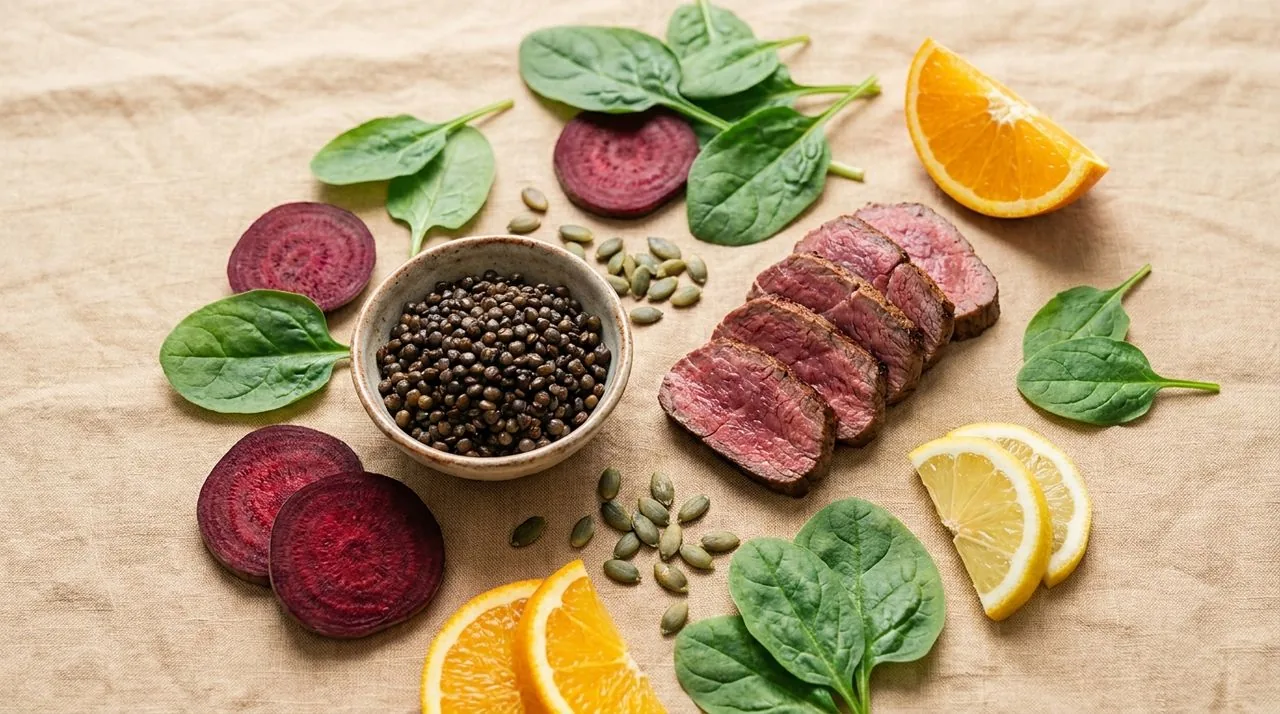
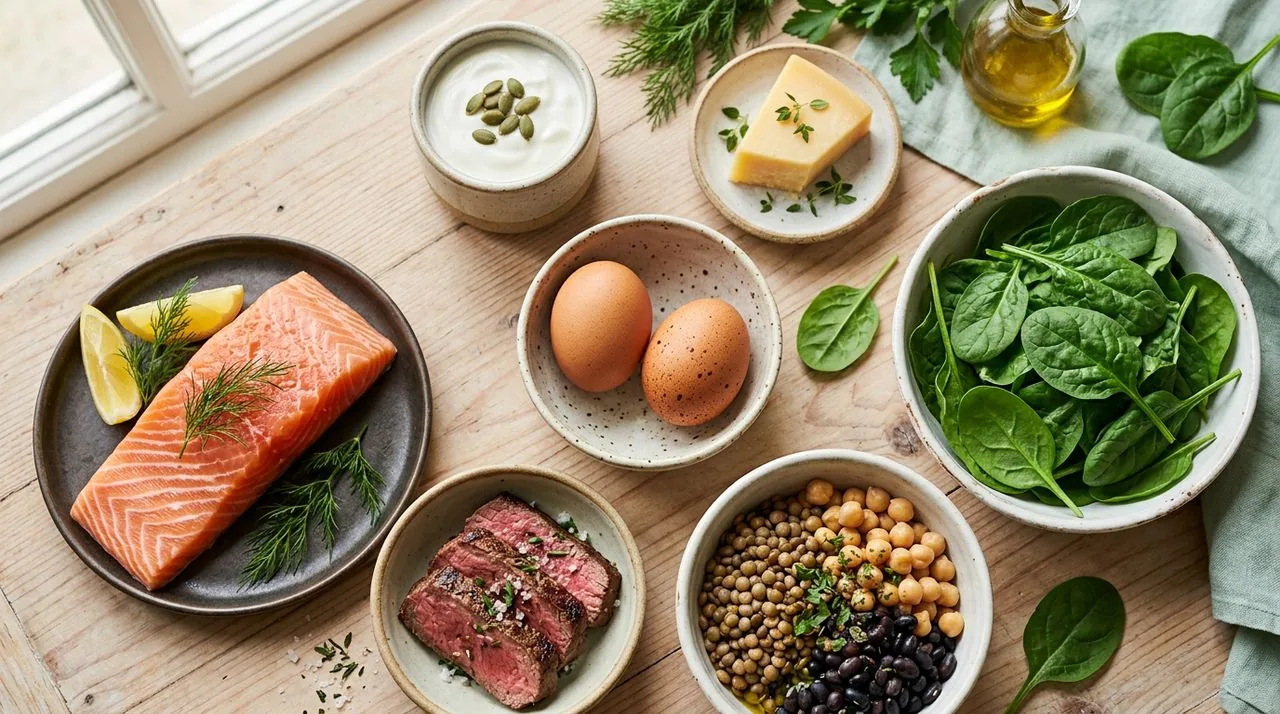
Instead of cutting things out, focus on what is proven to help inflammation and metabolism in general. That means enough protein, plenty of vegetables and fibre, and regular meals. Get enough selenium and zinc from food (fish, eggs, nuts, seeds). Limit alcohol, don't smoke and sleep well.
Supplements: what has evidence and what doesn't
Selenium — the most evidence, but it has to be read correctly
A meta-analysis of randomised trials published in the journal Thyroid (2024) included 32 studies:
- Anti-TPO falls significantly (SMD −0.96; CI −1.36 to −0.56; 2,358 participants), but with wide variation between studies.
- In those not on hormone therapy, TSH falls slightly (SMD −0.21; CI −0.41 to −0.02).
- No significant effect on fT4 and fT3.
- Quality of life: mixed — improvement in two groups, no difference in four.
- The overall certainty of evidence is moderate.
What is fair to say: lowering antibodies is not the same as feeling better or preventing hypothyroidism. This is the most common misreading of this research.
Vitamin D
Meta-analyses of randomised trials show that vitamin D supplementation lowers anti-TPO and anti-Tg antibodies. In a network meta-analysis its effect was milder than that of medicines. Vitamin D deficiency is common and has consequences of its own, so the sensible approach is: measure, correct the deficiency, don't dose blindly.
Myo-inositol with selenium
A newer meta-analysis finds that the combination of myo-inositol and selenium lowers TSH more than selenium alone in Hashimoto's with subclinical hypothyroidism. In the original study of 168 patients (TSH between 3 and 6), TSH and anti-Tg fell. There was no significant difference for T3, T4 and anti-TPO. There are few studies, and the authors call for caution. This is an option to discuss with your doctor when TSH is borderline, not a standard recommendation.
Iron, B12, zinc, magnesium
Deficiencies are more common. One reason is that Hashimoto's is often accompanied by autoimmune gastritis, which reduces the uptake of iron and vitamin B12. The rule is simple: measure, correct, measure again. Taking things “just in case” does not help and can do harm. Ferritin is the best early indicator of iron deficiency — it can be low well before anaemia shows up.
What not to take
High doses of iodine and seaweed · “thyroid support” products with an unknown composition (some products contain actual thyroid hormone or high iodine without saying so clearly) · biotin before a blood test — it does not harm the thyroid, but it distorts the measurement.
What else to check if you have Hashimoto's
Autoimmune diseases come in clusters — whoever has one has a higher risk of another.
| What | Why |
|---|---|
| Coeliac disease (tTG-IgA) | more common with Hashimoto's; changes diet and nutrient uptake |
| Vitamin B12 | autoimmune gastritis and pernicious anaemia are common companions |
| Ferritin and complete blood count | tiredness often comes from here, not from the thyroid |
| Vitamin D | deficiency is common; linked to antibodies |
| Blood sugar, HbA1c | type 1 diabetes belongs to the same group |
| Vitiligo, rheumatoid arthritis | conditions that occur together more often |
| Planning a pregnancy | requires different targets and closer monitoring |
What the latest research says
- Selenium remains the best-studied supplement: it reliably lowers antibodies, but is not proven to improve symptoms or slow the disease.
- Persistent symptoms with normal results have become a research topic of their own. Researchers are studying the roles of inflammation, the microbiome, tissue sensitivity to the hormone and psychological factors.
- EBV is the subject of several reviews that describe the mechanisms of the link; there are no clinical consequences for now.
- The T4 + T3 combination remains an open question: no consistent evidence of an advantage, but a perceived subjective preference in some patients.
- The European Thyroid Association published guidelines in 2025 on the use of levothyroxine as monotherapy, with an emphasis on optimising existing treatment.
The complementary-medicine view — honestly
A 2025 meta-analysis looked at traditional Chinese medicine preparations (Xiaoyao-San). It reported that, in combination with levothyroxine, they lowered antibodies and improved TSH normalisation compared with standard treatment alone. Acupuncture is also being studied for symptom relief.
How to read this: studies in this field often have small samples and a known risk of publication bias. The authors themselves call for better studies. The key point is that in these studies it is an addition to treatment, not a replacement.
What you can do this week
- Get your testing right — stop biotin 2 days before, have blood drawn in the morning, take levothyroxine after the draw.
- Check how you take your tablet — coffee, calcium or iron too close to the dose are a common reason the medicine doesn't work.
- Measure what could explain the tiredness: ferritin, B12, vitamin D, blood sugar, coeliac disease.
- Add up the iodine and selenium from all your supplements — the total is often higher than you think.
- Don't start a gluten-free diet until you have been tested for coeliac disease.
Frequently asked questions
What is Hashimoto's thyroiditis?
An autoimmune disease in which the immune system mistakes the body's own thyroid tissue for a foreign invader. It attacks the tissue step by step, through anti-TPO and anti-Tg antibodies and through immune cells. It is not a thyroid disease but an immune-system disease that shows up in the thyroid.
Do raised antibodies mean I have to take tablets?
No. Medication is not started because of antibodies but based on thyroid function (TSH, fT4), symptoms and age. Raised antibodies with normal function are a reason to monitor, not to treat.
Does selenium help in Hashimoto's?
A 2024 meta-analysis of randomised trials shows that selenium significantly lowers anti-TPO antibodies. In those not on hormone therapy it also slightly lowers TSH. But lowering antibodies is not the same as feeling better or preventing hypothyroidism. There is no effect on free T4 and T3, and quality-of-life results are mixed. The certainty of evidence is moderate. Discuss the dose with your doctor; the EFSA tolerable upper intake level is 255 µg/day.
Do I have to give up gluten?
If you have coeliac disease, a gluten-free diet is required. Otherwise the evidence is weak. A systematic review included only three randomised trials with 110 participants and inconsistent outcomes. In one of them, blinded reintroduction of gluten had no clear effect on thyroid results. If you are considering it, get tested for coeliac disease first, while you are still eating gluten — otherwise the test becomes falsely negative.
Is iodine helpful in Hashimoto's?
Be careful. Excess iodine is a recognised environmental risk factor for autoimmune thyroid disease and can make the condition worse. Be especially careful with seaweed (kelp, kombu), which can contain extremely high and variable amounts of iodine. Iodised salt in normal use is not a problem — concentrated supplements are.
Why do I still have symptoms even though my TSH is normal?
This is common and it is not imaginary. Before blaming the thyroid, check ferritin, vitamin B12, vitamin D, coeliac disease, blood sugar, sleep quality, and depression and anxiety. All of these cause the same symptoms and are more common in Hashimoto's. Persistent symptoms with a well-controlled thyroid are an active area of research today.
Does EBV cause Hashimoto's?
Studies describe a possible link through latent infection and molecular mimicry, which is interesting for research. But an association is not proof of cause. EBV testing is not part of Hashimoto's care, and there is no EBV treatment that improves the course of the disease. Antiviral or detox protocols for EBV in Hashimoto's have no evidence behind them.
Can Hashimoto's be cured?
Hashimoto's is a chronic condition. With proper hormone replacement when needed and a healthy lifestyle, you can live well with it. But there is no proven way to make the autoimmunity disappear. Promises of a cure are a reason for caution.
Already have a thyroid report?
Upload it to Blood Lab 360 and get every value explained.
Upload your report →