In short
- Magnesium is involved in muscle and nerve function and energy.
- Signs of low magnesium: cramps, tiredness, poorer sleep (but they are not specific).
- The serum value is not the whole story — most magnesium is inside the cells.
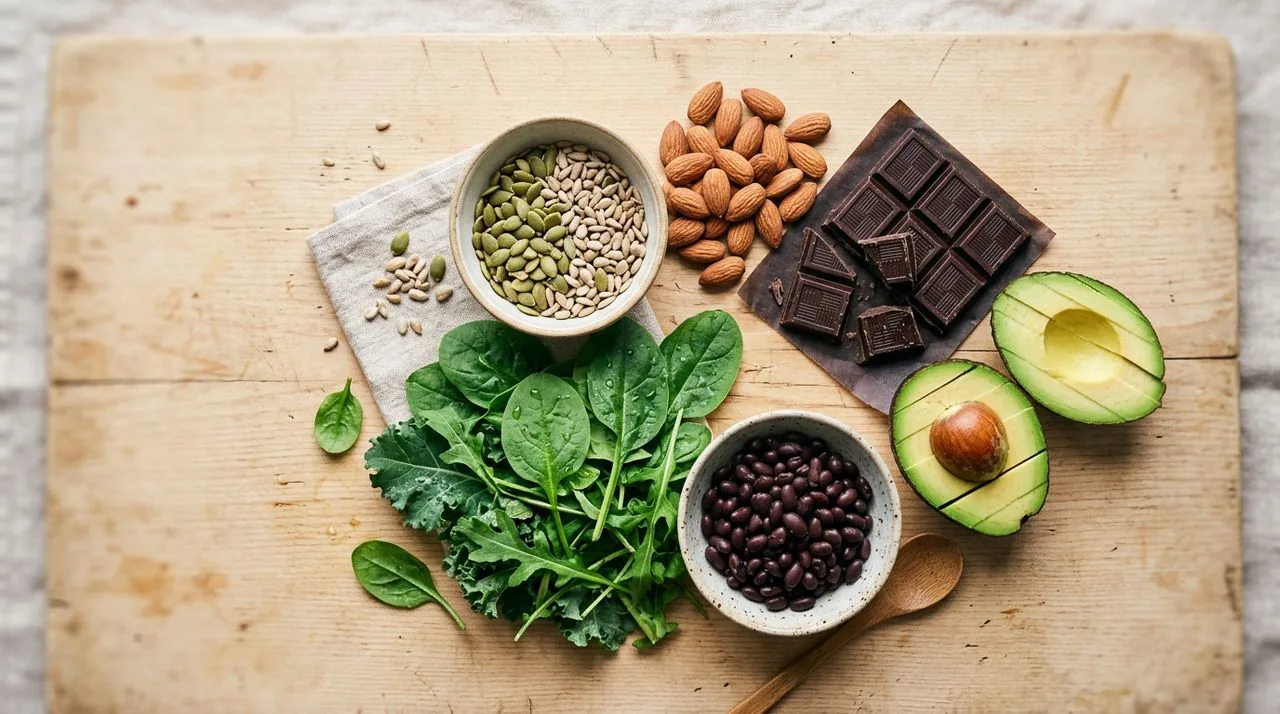
- You get enough from nuts, seeds, vegetables and whole grains.
Magnesium takes part in hundreds of processes in the body — from muscle contraction to relaxing the nervous system and making energy. Deficiency is common. But it is not always easy to measure from blood alone.
Why magnesium matters
Magnesium contributes to normal muscle and nerve function, to reducing tiredness and to electrolyte balance (EFSA). It also affects sleep quality and stress tolerance. Low stores often show up vaguely — as cramps, restlessness or slower recovery.
What the report tells you (and what it does not)
In blood we measure serum magnesium (usually ~0.75–0.95 mmol/L). But here is the catch: most magnesium is in the cells and bones. So the serum value can stay normal despite lower body stores. That is why the report is judged together with symptoms and diet, not as a final verdict.
How to get enough magnesium
| Source | Examples |
|---|---|
| Nuts and seeds | almonds, pumpkin and sunflower seeds |
| Leafy vegetables | spinach, chard |
| Legumes and whole grains | beans, lentils, oats |
| Other | dark chocolate, avocado |
About supplements: magnesium from food is the first choice. A supplement makes sense with symptoms or increased need (intense sport, stress). Doses that are too high can cause diarrhoea. With kidney disease, talk to your doctor.
How Blood Lab 360 helps you
We explain magnesium in the context of your symptoms and diet. We link it to other markers of tiredness (ferritin, vitamin D). Then we track your progress over time.
Frequently asked questions
What are the signs of magnesium deficiency?
Muscle cramps, tiredness, irritability and poorer sleep — but they are not specific.
Why is serum magnesium not always enough?
Most magnesium is in the cells and bones, so the serum value can stay normal despite lower stores.
Which foods are high in magnesium?
Nuts and seeds, leafy vegetables, legumes, whole grains and dark chocolate.