In short
- A high RDW means your red blood cells vary more in size than usual. The most common reason is an early or developing deficiency of iron, vitamin B12 or folate.
- In our knowledge base, RDW up to 14.5% is within range, 14.5 to 16% is mildly raised, and above 16% is raised.
- A high RDW with a normal MCV can flag a deficiency before anemia shows. Ferritin, B12 and folate are the usual next tests.
- With small red cells, a high RDW points toward iron deficiency, while a normal RDW points toward thalassemia trait.
- A low RDW is not a sign of anemia and is not usually a reason to worry.
RDW is one of the most overlooked numbers in a complete blood count, yet it often moves first. Here you learn what a high RDW means, the ranges we use and where they come from. You also see how RDW combines with MCV, hemoglobin and ferritin to point toward a cause.
What does a high RDW mean on a blood test?
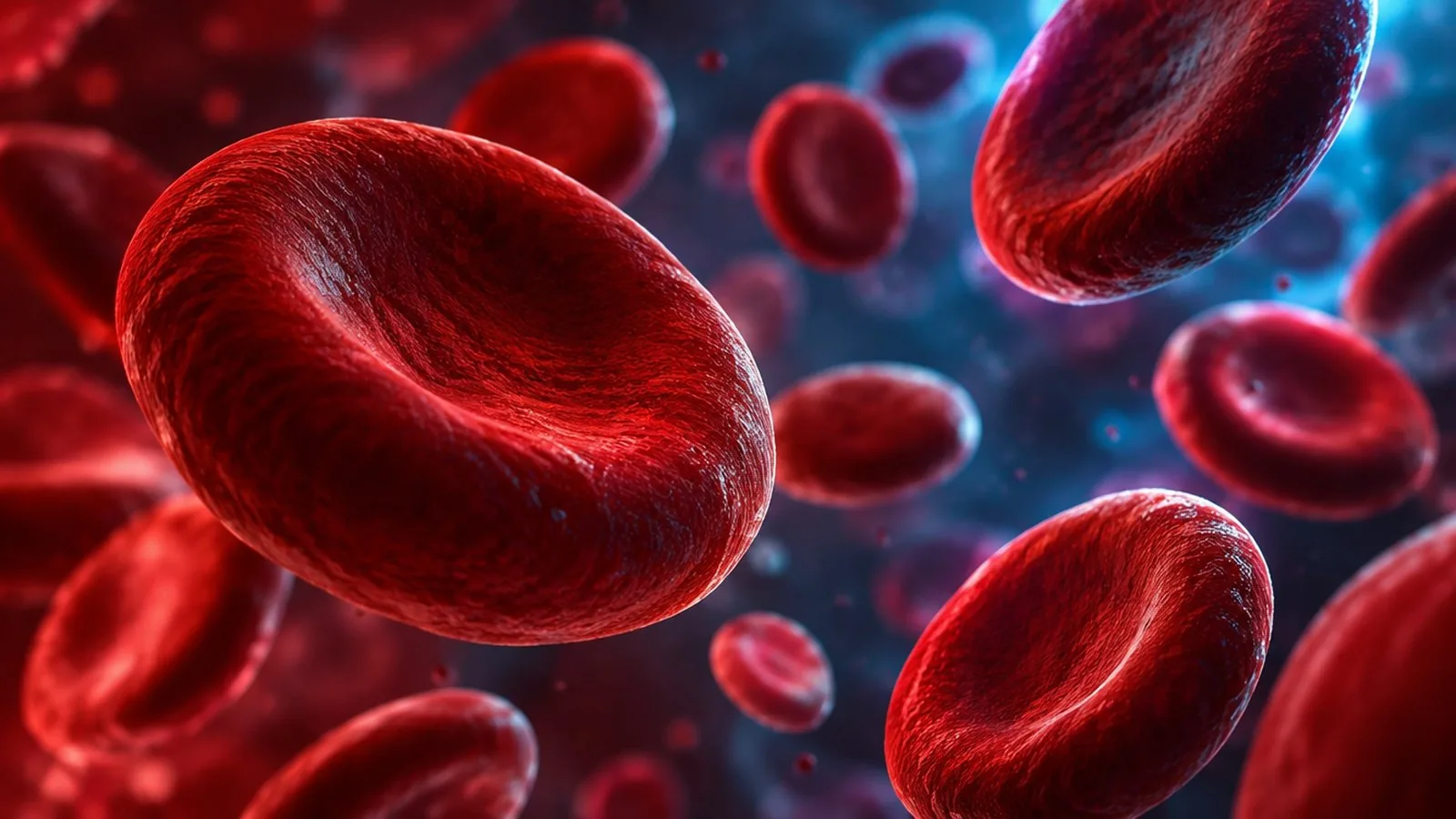
A high RDW (red cell distribution width) means your red blood cells differ in size more than usual. Uniform cells give a low RDW; a mix of small and large cells gives a high one. The most common reason is a developing deficiency of iron, vitamin B12 or folate.
Why does a deficiency widen the spread? Your body keeps making new red cells. When iron or B vitamins run short, the new cells come out a different size from the older ones. For a while both kinds circulate together, and the analyzer sees the mix.
The Cleveland Clinic Journal of Medicine review notes that in iron deficiency RDW often rises before MCV falls. That makes it an early clue. It also names recent bleeding and fast red cell breakdown (hemolysis) as causes of a high RDW.
One practical detail: most reports print RDW as a percentage, also labeled RDW-CV. Some analyzers add an RDW-SD value in femtoliters. The ranges in this article apply only to the percentage.
What is a normal RDW range?
In our knowledge base, an RDW up to 14.5% is within range, 14.5 to 16% is mildly raised, and anything above 16% is raised. Labs set their own limits for this marker, so compare your value with the range on your report.
| RDW (%) | Rating | What it usually means |
|---|---|---|
| up to 14.5 | Within range | Red cell size is uniform |
| 14.5–16 | Mildly raised (borderline) | Often an early sign of a deficiency (iron, B12) |
| over 16 | Raised | Worth checking iron stores and B vitamins |
Source: Blood Lab 360 knowledge base, based on a laboratory reference interval; RDW is method-dependent and has no European guideline with an explicit cut-off. The Cleveland Clinic Journal of Medicine (2019) gives normal ranges of about 11% to 16%, depending on the laboratory. The range on your own report applies.
So an RDW of 15% is a mild flag, not an alarm. On its own it tells you to look at the rest of the report. It does not tell you that something is wrong.
What does high RDW with a normal MCV mean?
A high RDW with a normal MCV most often means an early deficiency. The average cell size is still normal, but a new batch of cells of a different size has started to appear. Iron, B12 and folate are the first things to check.
There is a second pattern that is easy to miss. When iron deficiency and B12 or folate deficiency occur together, small and large cells are made at the same time. They can average out to a normal MCV. The RDW then shows the mix that MCV hides.
A third reason is recent blood loss or red cell breakdown. In that case the doctor looks at the whole picture, including hemoglobin and how you feel. Our article on MCV, MCH and MCHC explains what cell size itself tells you.
How do RDW and MCV work together?
RDW is most useful next to MCV, because together they describe both the average size of your red cells and how mixed they are. The combinations below are the ones that shift the likely cause. They prepare you for a talk with your doctor and do not replace one.
| MCV | RDW | Most likely direction | Next tests |
|---|---|---|---|
| Low | High | Iron deficiency | Ferritin; in men and after menopause, a search for blood loss |
| Low | Normal | Thalassemia trait, or anemia of chronic disease | Ferritin; a doctor may order hemoglobin electrophoresis |
| Normal | High | Early iron, B12 or folate deficiency; mixed deficiency; recent bleeding or hemolysis | Ferritin, B12, folate, repeat blood count |
| High | High | B12 or folate deficiency is a common reason | B12, folate |
| Normal | Normal | No size signal; a deficiency is still possible | Depends on symptoms and hemoglobin |
Source: StatPearls, Microcytic Hypochromic Anemia (2023); Cleveland Clinic Journal of Medicine (2019); Blood Lab 360 knowledge base.
There is one exception worth knowing. The Cleveland Clinic review notes that in long-standing, severe iron deficiency RDW can be normal again, because nearly all cells have become small. So a normal RDW does not rule out iron deficiency. Ferritin does that job better.
In our knowledge base, ferritin below 15 µg/L means empty iron stores, and 15 to 30 µg/L is borderline. The WHO 2020 ferritin guideline also warns that inflammation raises ferritin, so a normal value can hide a deficiency. For vitamin B12, under 133 pmol/L is low and 133 to 258 pmol/L is a grey zone. Folate under 7 nmol/L is low. Read more in ferritin and iron and vitamin B12 and folate.
What if ferritin, B12 and folate are all normal?
Then the high RDW needs a broader look, but it is still rarely urgent on its own. MedlinePlus lists chronic liver disease, heart disease, diabetes, kidney disease and some cancers among conditions linked with a high RDW. A doctor judges this together with your history and other results.
Research also links RDW with long-term outcomes. The Cleveland Clinic review cites a population study in which all-cause mortality rose by 23% for every 1% increase in RDW. In heart failure, RDW predicted outcomes strongly. These are statistical links across large groups. They do not mean a single high RDW predicts your future.
What helps most is the trend. A mildly raised RDW that stays stable with normal hemoglobin is a different picture from one that climbs while hemoglobin falls. Our article on the complete blood count puts RDW in the context of the other values.
What does a low RDW mean?
A low RDW means your red cells are very uniform in size, and it is not a sign of anemia. MedlinePlus says it is not usually something to worry about. The Cleveland Clinic review adds that a low RDW is not consistently linked with any blood disorder.
See a doctor soon if a high RDW comes with hemoglobin below 110 g/L (11.0 g/dL), or a hemoglobin that keeps falling between tests. The same applies to breathlessness at rest, chest pain, fainting, black or bloody stools, or very heavy periods. Tingling, numbness or balance problems with a low or borderline B12 also need prompt care. Hemoglobin below 80 g/L is severe anemia by the WHO 2024 definition and needs medical care without delay.
How Blood Lab 360 reads this
Blood Lab 360 never rates RDW alone. It reads RDW together with MCV and hemoglobin, and hemoglobin is judged against the WHO cut-off for your sex. When ferritin, B12 and folate are on your report, the app adds them to point toward a likely direction. An RDW between 14.5 and 16% is shown as a mild flag, not as a warning.
If RDW is raised, the suggested re-test is after about 12 weeks. That gives new red cells time to replace the older mix, so a real change can show. The app names the source of every range, explains patterns in plain words, and does not diagnose.
Frequently asked questions
What does a high RDW blood test mean?
Your red cells vary in size more than usual. The most common reason is an early deficiency of iron, B12 or folate. Read it with MCV, hemoglobin and ferritin before drawing conclusions.
Is an RDW of 15% bad?
In our knowledge base, 15% is mildly raised (borderline). It is a reason to look at ferritin, B12 and folate, not a cause for alarm. Some labs treat values up to 16% as normal.
Is high RDW with normal MCV serious?
Usually not urgent. It often shows an early deficiency or a mix of iron and B12 deficiency. Checking ferritin, B12 and folate usually explains it.
What does a low RDW mean?
Your red cells are uniform in size. A low RDW is not a sign of anemia and is not linked with any specific blood disorder.
Does a high RDW mean cancer?
Usually not. The most common reason is a nutrient deficiency. Some chronic diseases, including some cancers, are linked with a high RDW, so a doctor looks at the whole picture if the usual causes are ruled out.
When should I repeat the RDW test?
Our app suggests about 12 weeks. Red cells are replaced slowly, so an earlier repeat often shows little change, even when the cause is being treated.