In short
- Total cholesterol says little. What matters is the “bad” one (LDL) and even more ApoB.
- ApoB counts the actual number of particles that clog the vessels. It is often more precise than LDL.
- Targets at low risk: cholesterol below 5.0, LDL below 3.0, ApoB below 0.9.
- You lower it with unsaturated fats, fibre, omega-3 and exercise.
- At high risk or with very high values, a doctor decides.
“My cholesterol is high” is a common sentence. But total cholesterol alone tells only part of the story. For cardiovascular risk, two things matter more: the level of “bad” cholesterol and the number of atherogenic particles circulating in your vessels.
Cholesterol, LDL, HDL — which is which
Cholesterol travels in the blood in particles (lipoproteins). LDL (“bad”) carries it into the vessel walls, where it can build up. HDL (“good”) carries it away. So we want LDL as low as possible and HDL high enough. Total cholesterol is the sum of everything. It is useful, but a rough figure.
Why ApoB is often the best indicator
Every atherogenic particle (LDL and related ones) carries one molecule of the protein ApoB. Measuring ApoB therefore tells you the actual number of particles that can damage the vessels. That is often a more precise indicator of risk than LDL alone. This is especially true in people with metabolic disorders or high triglycerides. Modern guidelines increasingly put ApoB in the foreground.
What your values mean
| Marker | Target (low risk) |
|---|---|
| Total cholesterol | below 5.0 mmol/L |
| LDL | below 3.0 mmol/L |
| ApoB | below 0.9 g/L (optimally below 0.8) |
| HDL | above 1.3 (women) / 1.0 (men) |
| Triglycerides | below 1.7 mmol/L |
Source: ESC/EAS 2019. Its ApoB goals are below 1.0, 0.8 and 0.65 g/L depending on risk level; 0.9 g/L is our practical low-risk target, not an ESC figure. At higher cardiovascular risk the targets are lower. A doctor decides individually.
How to lower cholesterol and ApoB naturally
1) Swap saturated fats for unsaturated ones
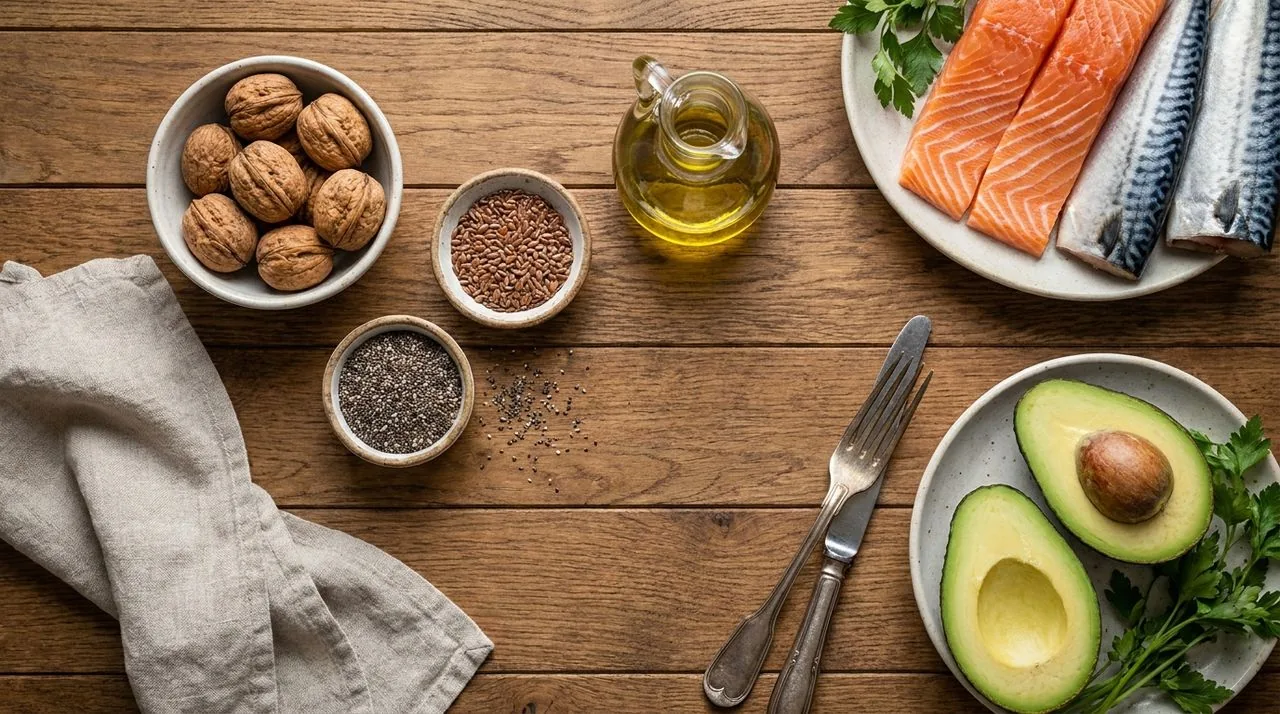
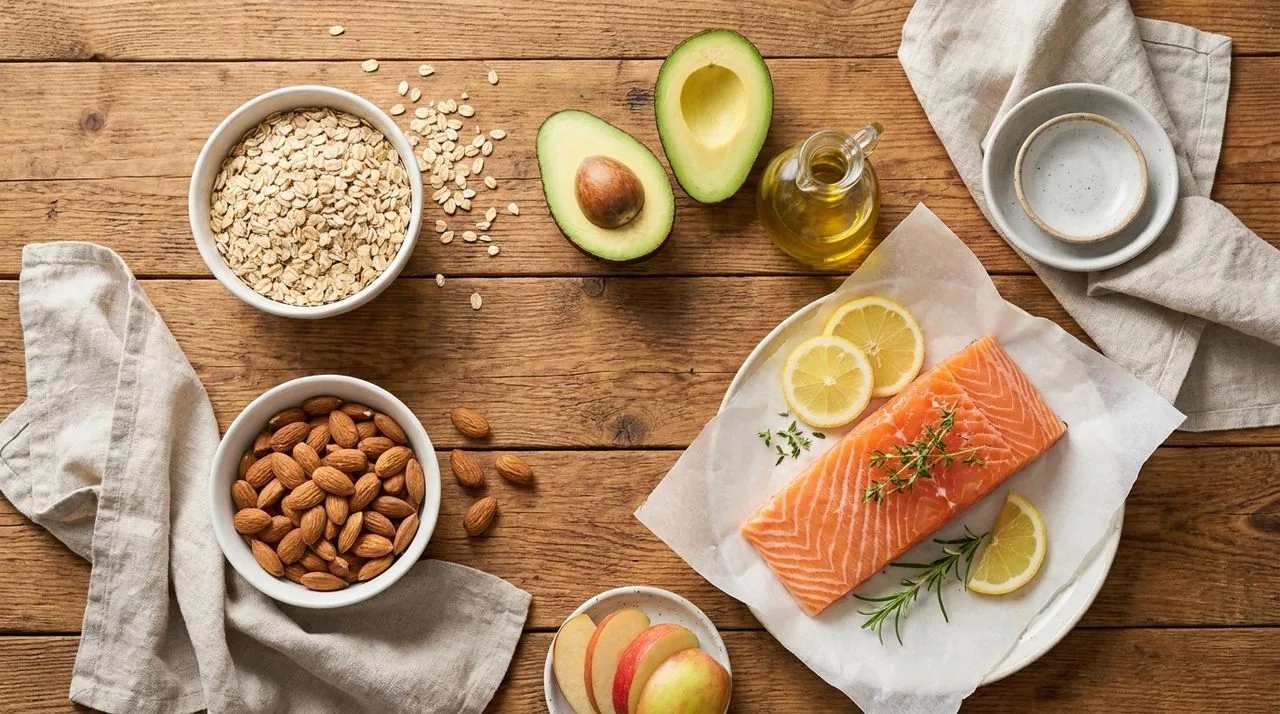
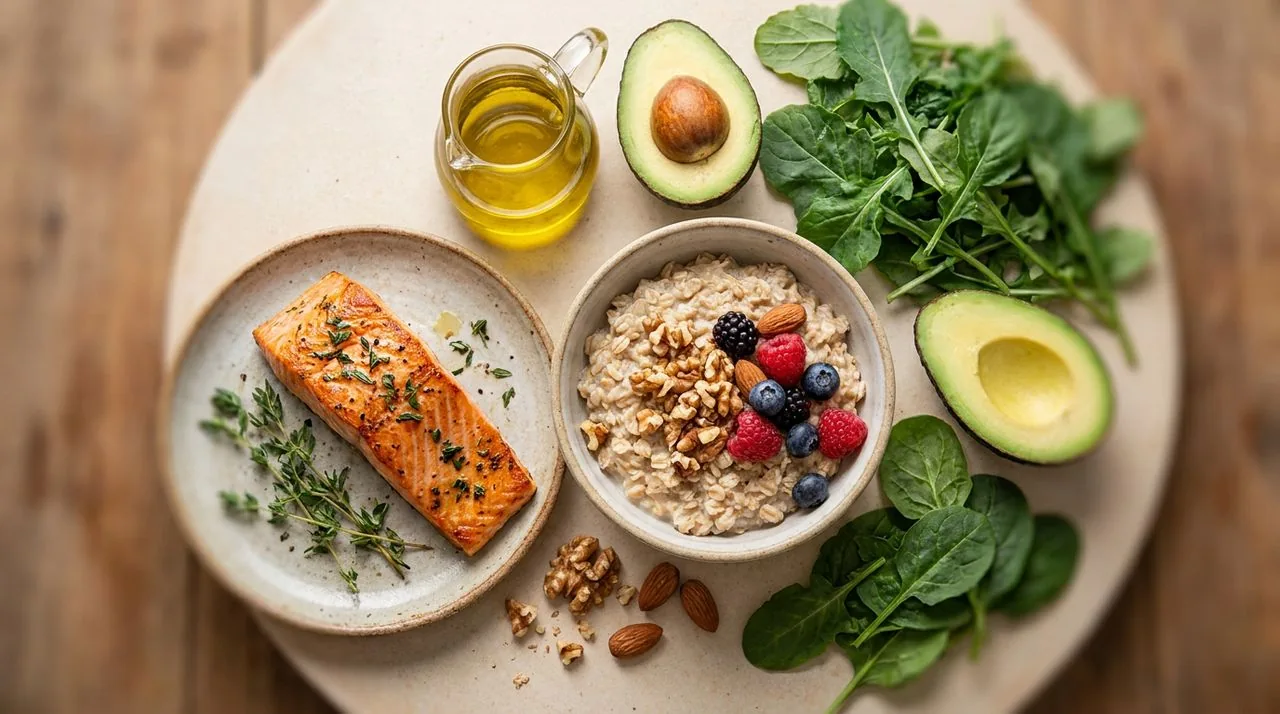
Eat less butter, fatty processed meats and processed food. Eat more olive oil, nuts, avocado and oily fish. Replacing saturated with unsaturated fats contributes to normal cholesterol levels (EFSA).
2) Soluble fibre every day
Oats (beta-glucans), legumes, apples and barley bind cholesterol in the gut. Beta-glucans contribute to maintaining normal cholesterol levels (EFSA, ~3 g/day).
3) Omega-3 and plant sterols
Eat oily fish twice a week. If needed, add supplements with plant sterols, which lower cholesterol further.
4) Regular aerobic exercise
Endurance exercise improves the lipid profile and lowers triglycerides. Even brisk walking on most days of the week counts.
A realistic target: a noticeable change within 8–12 weeks of consistent lifestyle changes. A follow-up report shows whether the approach is working.
How Blood Lab 360 helps with this
Upload your report and we explain total cholesterol and, when it is measured, ApoB — the more precise indicator of risk. We put the results in plain language, show concrete steps to lower them and track your progress over time. Related: how triglycerides and blood sugar affect the vessels.
Frequently asked questions
Is ApoB a better indicator than LDL?
ApoB counts the actual number of atherogenic particles. It is often a more precise indicator of cardiovascular risk than LDL alone, especially in metabolic disorders.
What are the target cholesterol values?
At low risk, a sensible target is total cholesterol below 5.0 mmol/L and LDL below 3.0 mmol/L. At higher risk the targets are lower.
Can I lower cholesterol without medication?
With mildly raised values, lifestyle is often enough. At high risk, a doctor decides.